
Tag: Haile Selassie I
-
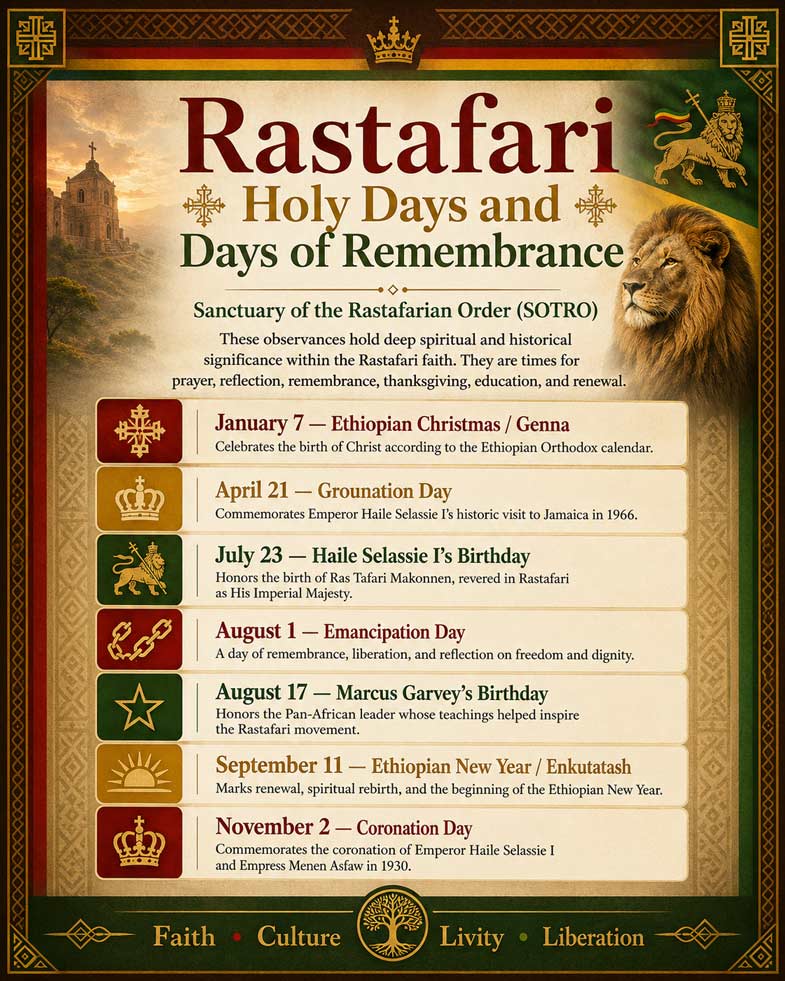
Rastafari Holy Days and Days of Remembrance The Sanctuary of the Rastafarian Order — SOTRO recognizes several sacred days and historical observances that hold deep meaning within the Rastafari faith, culture, and way of life. These days are not only commemorative dates. They are times for prayer, reflection, reasoning, thanksgiving, remembrance, education, and spiritual renewal.…
-
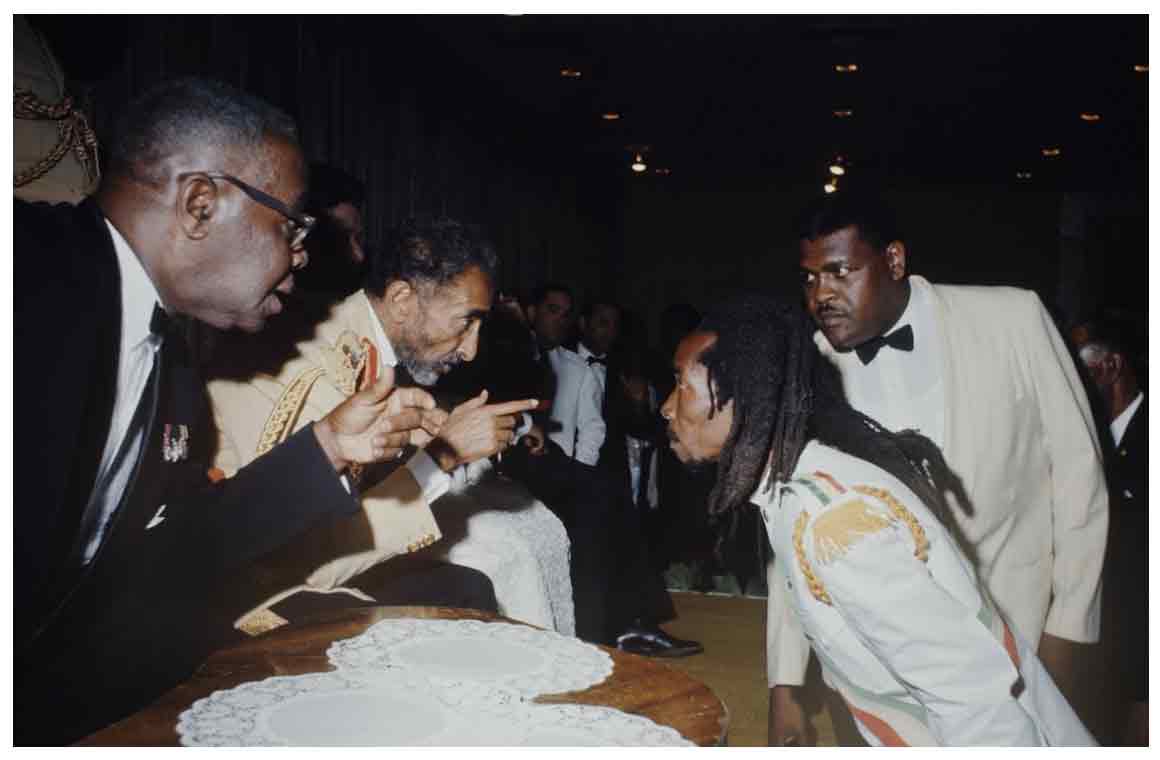
The King of Kings, Emperor Haile Selassie I, on Justice and Equality
By Biko Lion – August 8, 2021 | Teachings of H.I.M. “Justice is the fundamental axiom for the survival of freedom and government.”– H.I.M. Emperor Haile Selassie I Emperor Haile Selassie I, the King of Kings and Conquering Lion of Judah, stood firmly as a champion of righteousness, justice, and equality. His Majesty’s teachings continue…
-
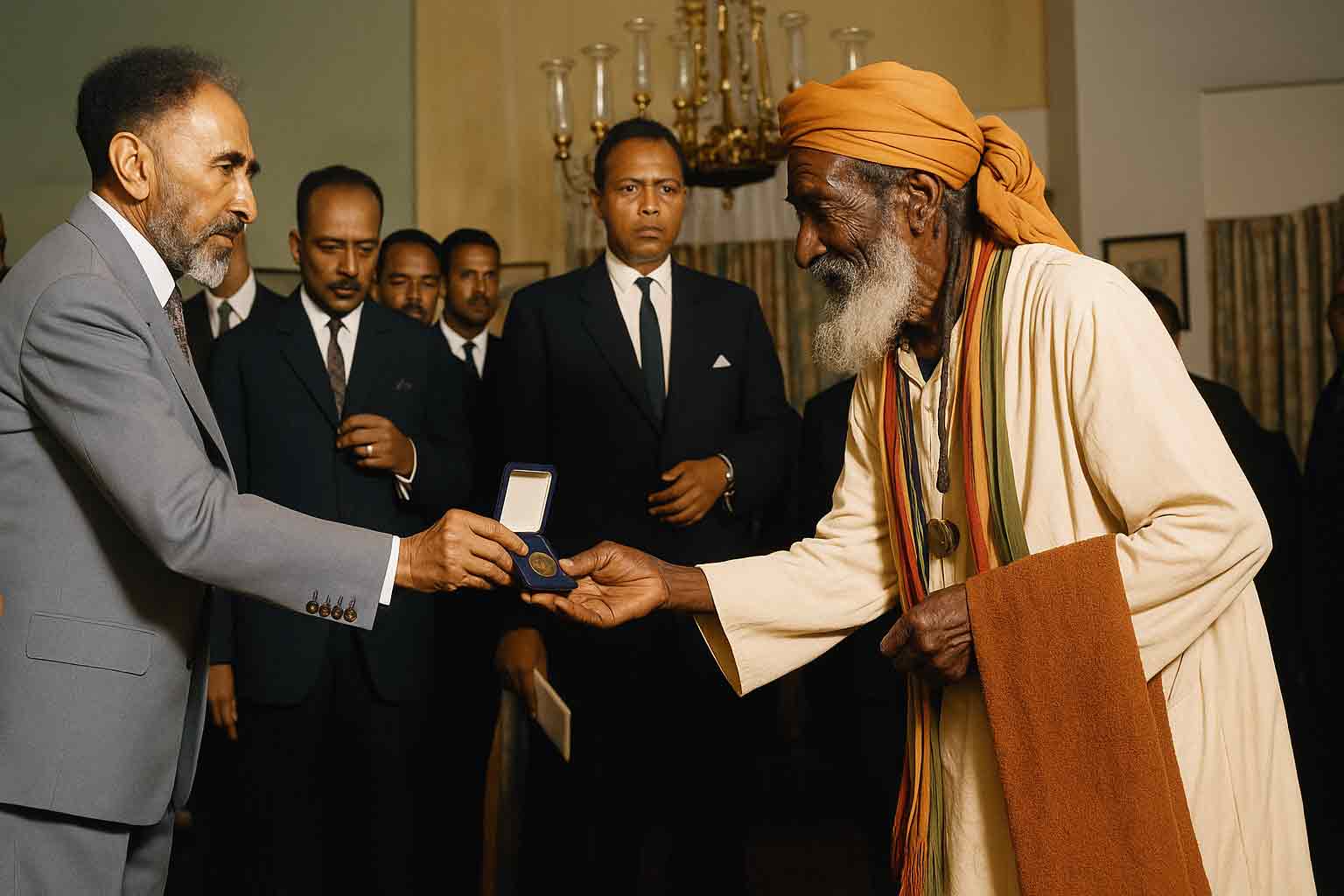
Explaining Haile Selassie I Through Biblical Theology and Beyond the Trinity
In the Rastafari trod, Haile Selassie I is recognized not through the lens of later church dogma such as the Trinity, but through the ancient and scripturally-rooted principle of divine kingship, name-bearing, and mediation. The recognition of His Imperial Majesty (H.I.M.) as God in Kingly Character emerges not from post-biblical philosophy, but from how God…
-

False Narratives/Misinformation About Rastafari
Discover the truth about Rastafari. This guide from the Sanctuary of the Rastafarian Order (SOTR) corrects common false narratives and misinformation about Rastafarian beliefs, practices, dietary laws, dreadlocks, cannabis, and religious rights in Canadian institutions.
-
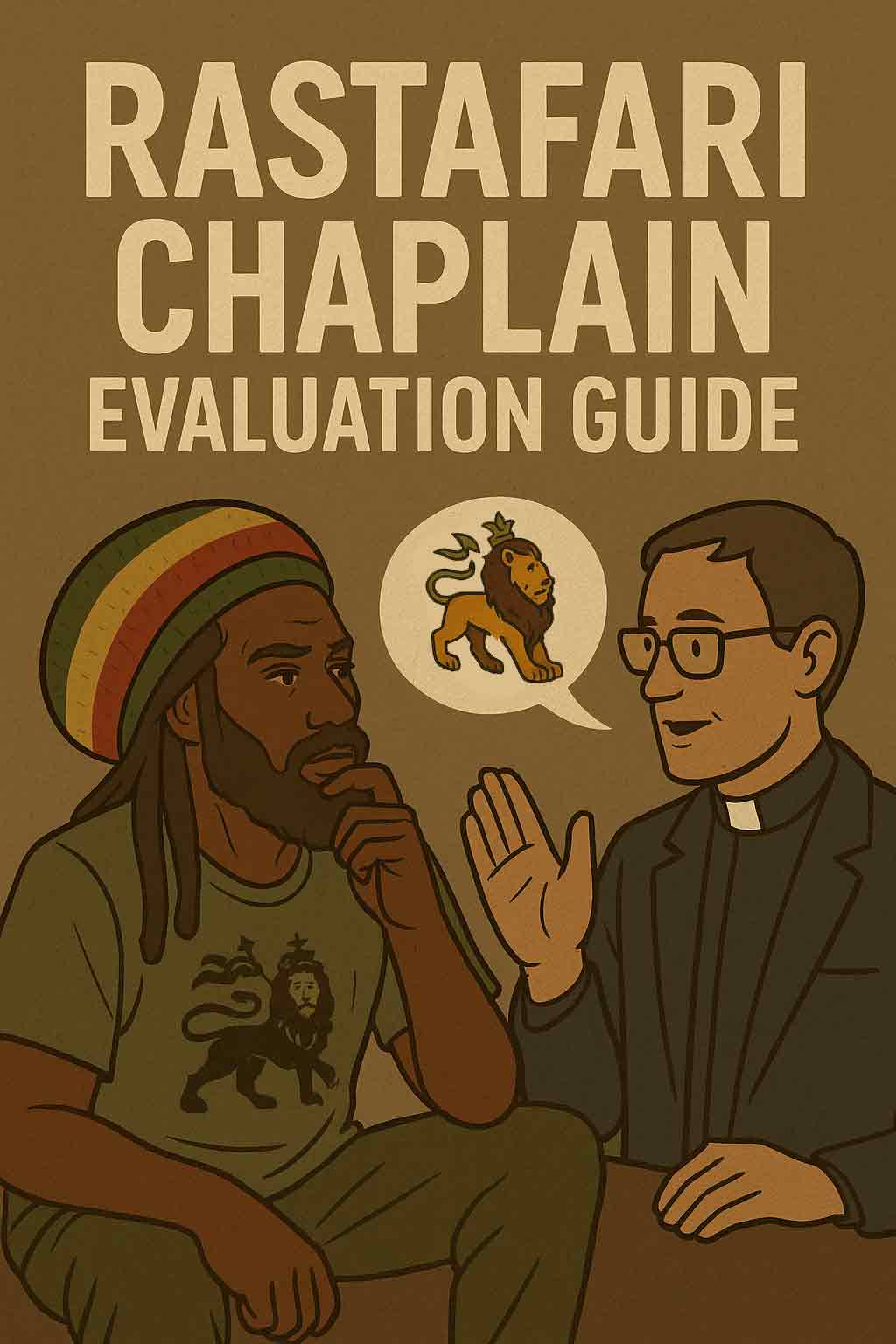
Discerning Sincerity in Rastafari Faith: Chaplain Evaluation Guide
Discerning the sincerity of Rastafari faith, especially in institutional settings (like correctional chaplaincy or community programs), requires a unique approach—because Rastafari is not a religion of outward ritual or church attendance. It’s a livity—a way of life that is personal, disciplined, and rooted in overstanding, not performance. Here’s how one might go about discerning sincerity…
-
Rastafarian terms (Iyaric) and Jamaican Patois, along with their English translations
You’re touching on something central to Rastafari word-sound power—the belief that language carries vibration, and many common English phrases are Babylonian spells that reinforce death, submission, or negativity. Here’s a breakdown of words/phrases in everyday English that Rastas often avoid (or “bun”) due to their hidden connections to death or spiritual defilement, with alternatives often…